
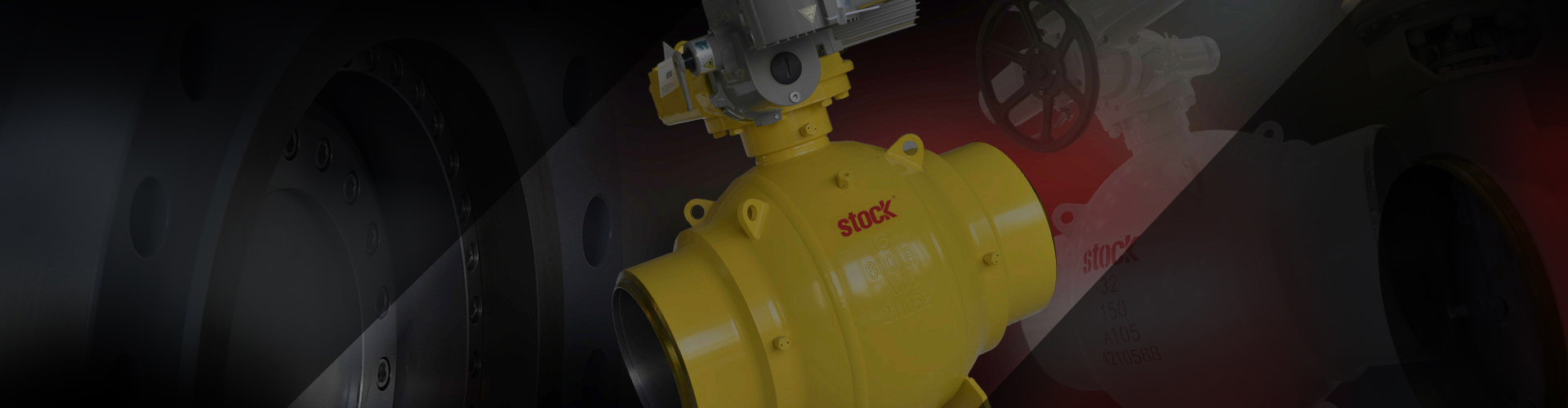
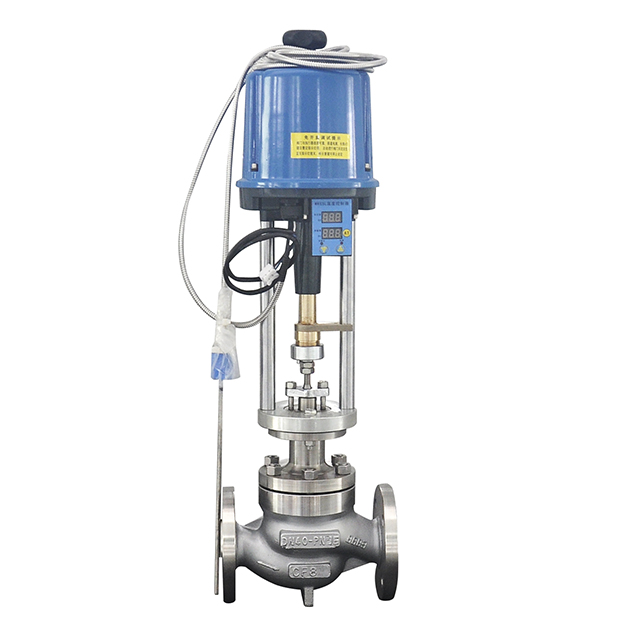
斯托克(STOCK)电动调节阀以220V 交流电为动力,接收 4-20mA 或 0-10mA 标准信号,驱动阀芯连续改变开度,从而自动控制管路中介质的流量、压力、温度、液位等参数,是工业过程自动化调节的常见执行终端。产品广泛用于电力、冶金、轻工、食品、石油、化工等行业的自动控制回路。
一、工作原理(信号→电机→阀杆→开度闭环)
收信号:PLC/DCS 输出 4-20mA 或 0-10mA 标准电信号给电动执行机构。
电-机转换:执行机构内的伺服系统把电信号转换成相应的直线位移,驱动阀杆运动。
改变流通面积:阀杆带动阀芯上下移动,改变阀芯与阀座之间的流通截面积,从而调节介质流量。
闭环反馈:位置反馈装置实时回传实际开度,与控制指令形成闭环校正,保证调节精度。
电开式(K 型):通电开、失电关,失电自动切断介质,加热炉燃料线、危险介质场合常用。
电关式(B 型):通电关、失电开,失电回到全开位,多用于需要失电泄压的管路。
二、结构组成
电动执行机构:电子式一体化结构,内含伺服放大器,输入控制信号及电源即可控制阀门开度。
阀体组件:由电动执行机构与各种阀体(单座、双座、套筒)组配而成,具备各类阀的特点。
阀内件:阀芯与阀座配合改变流通截面积,常见单座柱塞型等结构。
位置反馈单元:实时回传阀位信号,实现闭环控制。
三、主要技术参数
项目 | 典型范围 |
|---|---|
公称通径 DN | 20-300mm |
公称压力 PN | 1.6、2.5、4.0、6.4、10.0 MPa |
介质温度 | -40℃~+450℃(依阀盖形式而定) |
电源电压 | AC 220V,50Hz |
输入信号 | 0~10mA DC / 4~20mA DC |
流量特性 | 直线、等百分比 |
额定行程 | 10、16、25、40、60、100mm |
泄漏等级 | 硬密封 Ⅳ 级,软密封 Ⅵ 级 |
四、选型要看哪几件事
先算 Kv 值:按介质(液体/气体/蒸汽)和工况压差计算所需 Kv,阀门额定 Kv 取计算值的 1.1~1.5 倍,避免小开度振荡或流量不够。
压差与推力校核:执行机构额定推力须克服阀杆摩擦力、介质不平衡力及压差作用力,计算时预留 10% 以上余量,防止开关卡涩、关不严。
阀体形式看压差:高压差、洁净流体选单座;大流量、大压差选双座或套筒平衡式;含颗粒介质选抗冲刷阀芯。
介质定材质:弱腐蚀选 304/316 不锈钢;强腐蚀选衬氟或哈氏合金;高温蒸汽选金属硬密封。
确认失电安全位:燃料、蒸汽、有毒介质管线通常选电开(K 型),失电即切断;需失电泄压的系统选电关(B 型)。
I. Working Principle (Signal → Motor → Valve Stem → Opening Closed-Loop)
Receive Signal: PLC/DCS outputs a standard electrical signal of 4-20mA or 0-10mA to the electric actuator.
Electrical-to-Mechanical Conversion: The servo system inside the actuator converts the electrical signal into corresponding linear displacement, driving the valve stem to move.
Change Flow Area: The valve stem drives the plug to move up and down, changing the flow area between the plug and the seat, thereby regulating the medium flow.
Closed-Loop Feedback: The position feedback device transmits the actual opening in real time, forming closed-loop correction with the control command to ensure regulation accuracy.
Electric-Open Type (Type K): Opens on power, closes on power loss. Automatically cuts off the medium when power fails. Commonly used in heating furnace fuel lines and hazardous medium applications.
Electric-Close Type (Type B): Closes on power, opens on power loss. Returns to fully open position on power failure. Mostly used in pipelines requiring pressure relief on power loss.
II. Structural Components
Electric Actuator: Electronic integrated structure with built-in servo amplifier. Simply input the control signal and power supply to control the valve opening.
Valve Body Assembly: Composed of the electric actuator assembled with various valve bodies (single-seat, double-seat, cage/sleeve), combining the characteristics of each type.
Valve Trim: The plug and seat work together to change the flow area. Common structures include single-seat plunger type.
Position Feedback Unit: Transmits valve position signals in real time to achieve closed-loop control.
III. Main Technical Parameters
Item | Typical Range |
|---|---|
Nominal Diameter DN | 20-300mm |
Nominal Pressure PN | 1.6, 2.5, 4.0, 6.4, 10.0 MPa |
Medium Temperature | -40°C ~ +450°C (depending on bonnet type) |
Power Supply Voltage | AC 220V, 50Hz |
Input Signal | 0~10mA DC / 4~20mA DC |
Flow Characteristics | Linear, Equal Percentage |
Rated Stroke | 10, 16, 25, 40, 60, 100mm |
Leakage Class | Class IV for hard seal, Class VI for soft seal |
IV. Key Considerations for Selection
Calculate Kv First: Calculate the required Kv based on the medium (liquid/gas/steam) and working pressure differential. The valve's rated Kv should be 1.1 to 1.5 times the calculated value to avoid small-opening oscillation or insufficient flow.
Pressure Differential and Thrust Verification: The actuator's rated thrust must overcome stem friction, medium unbalanced force, and pressure differential force. Reserve at least 10% margin during calculation to prevent sticking or incomplete closure.
Valve Type Based on Pressure Differential: Select single-seat for high differential pressure and clean fluids; double-seat or cage-balanced type for large flow and high differential pressure; anti-erosion plug for media containing particles.
Medium Dictates Material: Select 304/316 stainless steel for mild corrosion; PTFE-lined or Hastelloy for strong corrosion; metal hard seal for high-temperature steam.
Confirm Fail-Safe Position on Power Loss: Fuel, steam, and toxic medium lines typically select electric-open (Type K) for automatic shutoff on power failure; systems requiring pressure relief on power loss should select electric-close (Type B).
