
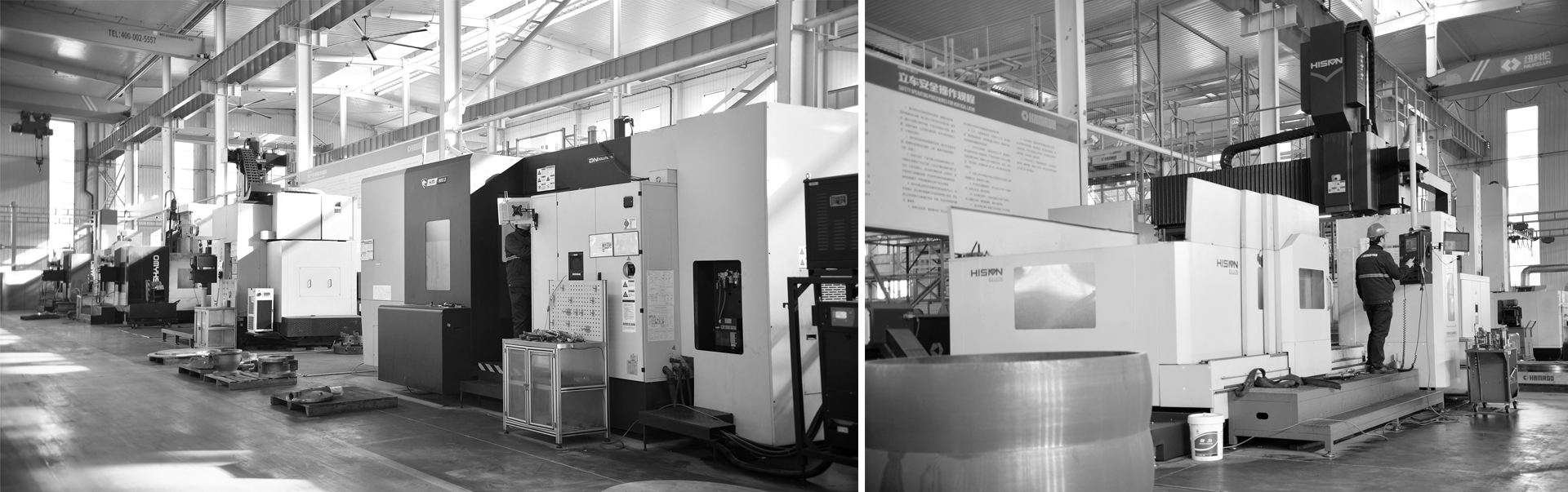
The company has established a precision machining equipment cluster centered on advanced CNC machining centers and CNC lathes, covering the precision forming and high-consistency manufacturing of valve bodies, bonnets, valve stems, valve seats, flanges, fittings, valve cores, and various fluid control components. This forms a complete machining chain spanning from raw material loading, rough machining, semi-finish machining, and finish machining to thread and sealing surface treatment, online measurement, deburring, cleaning, and pre-assembly processing.
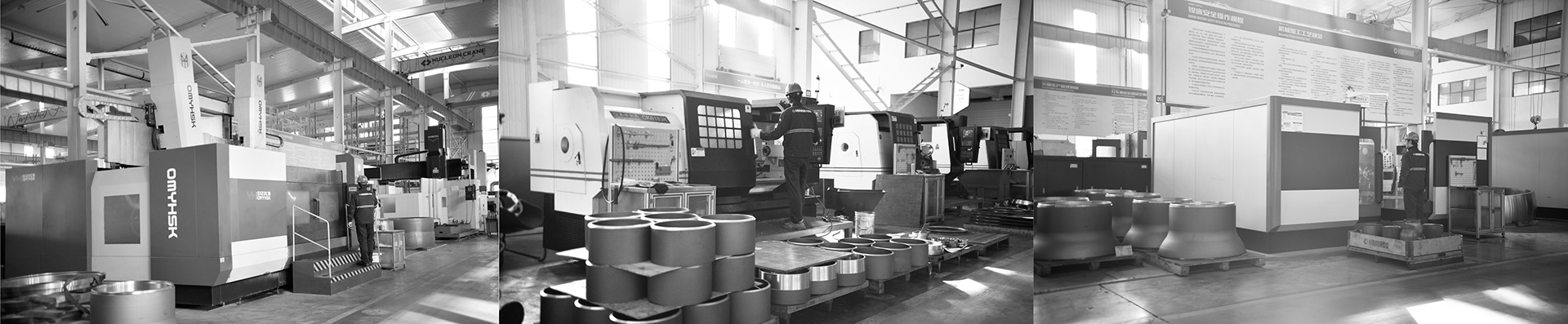
The CNC machining centers deployed by the company are capable of high-precision milling, drilling, tapping, boring, and complex cavity machining, handling common industrial valve features such as irregular flow passages, multi-face hole systems, flange sealing surfaces, and internal valve body channels. For fluid control products, the smoothness of flow passages, the position accuracy of hole systems, and the flatness and surface roughness of sealing surfaces directly determine valve leakage rates, flow capacity, and service life. Therefore, Stock emphasizes "single-setup machining, minimized datum conversion, controlled processes, and measurable results" for critical operations. Through CAD/CAM programming, tool life management, cutting parameter optimization, and process error-proofing, design tolerances are stably translated into manufacturing tolerances.
The CNC lathe cluster undertakes high-efficiency precision turning of valve stems, bushings, fittings, nuts, valve cores, and other rotary parts. Leveraging servo spindles, powered turrets, Y-axis and C-axis capabilities, online tool setting, and automatic bar feeders, the company achieves flexible switching between small-batch customization and mass production while ensuring roundness, cylindricity, coaxiality, and surface quality. Whether NPT, BSP, or Metric pipe threads, O-ring grooves, metal sealing surfaces, or mirror-finish mating surfaces, all can be completed under controlled processes, significantly reducing cumulative errors caused by conventional multi-machine transfers.
In the relationship between hardware and software capabilities, Stock places greater emphasis on "equipment cluster synergy" rather than the specifications of individual machines. Vertical machining centers, horizontal machining centers, CNC vertical lathes, CNC horizontal lathes, deep-hole and boring equipment, dedicated valve machining machines, and grinding and sealing surface treatment equipment together form a production matrix. This enables large-diameter valves, high-pressure valves, and stainless steel, carbon steel, alloy steel, and duplex steel components to be manufactured within the same system. Coupled with coordinate measuring machines (CMM), spectrometers, hardness testers, roughness testers, thread gauges, and pressure and sealing test platforms, machining no longer stops at "making it," but advances to "measuring accurately, retaining data, and tracing batches."
To accommodate the diverse operating conditions of industrial pipeline valves, Stock has also built a mature process library on the material machining side: stainless steel valve bodies focus on deformation prevention and surface cleanliness; carbon steel and alloy steel components emphasize strength and sealing surface stability; duplex steel, low-temperature steel, and special corrosion-resistant alloys control machining stress through tool selection, cooling methods, cutting speed, and thermal deformation compensation. This ability to close the loop of "material—tool—fixture—equipment—inspection" provides a more reliable product foundation for customers in petrochemical, power generation, water treatment, papermaking, heating, marine, and general industrial pipeline sectors.
Digitalization and process management represent another layer of competitiveness in this equipment cluster. Through process documentation, NC program version control, first-article inspection, in-process inspection, final inspection, and equipment maintenance systems, high precision no longer relies on individual craftsmanship, but is institutionalized as a replicable, auditable, and continuously improvable manufacturing capability. When order volumes fluctuate, flexible production lines enable rapid changeovers; when delivery deadlines are tight, critical components can be produced on parallel lines; when customers have special standards, the process engineering team can adjust setup and inspection plans according to API, ANSI, DIN, JIS, GB, and other systems.
斯托克流体控制技术有限公司
