-
You are here:
- Home
- > News
- > Industry Insights
斯托克流体控制技术有限公司

You are here:
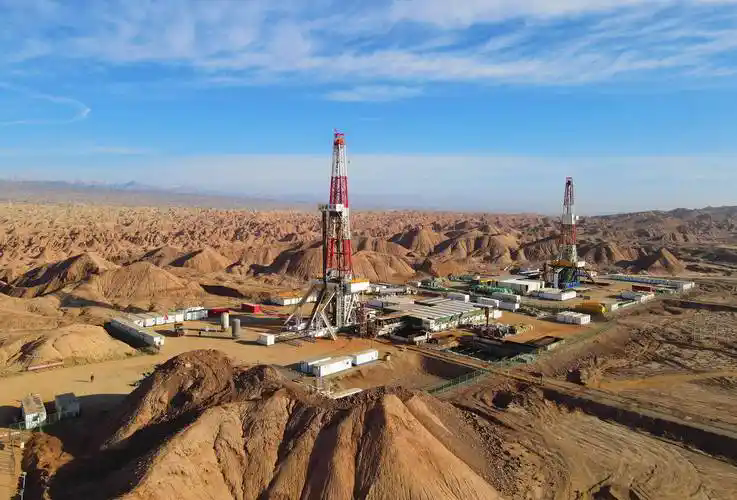
China Petroleum Network News (Special Correspondent Xi Zhijun, Correspondent Wu Xiaofeng) — On August 24, at the Ak1-H5 production site of the Akmomu Gas Field in Tarim Oilfield, as high-efficiency surface pressurized drainage gas recovery operations advanced, a production problem constraining capacity was successfully solved by the reservoir technical team of the Zepu Oil and Gas Production Management Area.
On August 9 this year, Tarim Oilfield released the Twenty Measures to Further Stimulate the Vitality of Scientific and Technological Innovation, clearly establishing an innovation orientation of “experts have the final say, those who perform well earn higher pay, failure can be tolerated, and operator and contractor sides act as one.” This has injected strong momentum into ultra-deep oil and gas exploration and development.
Empower experts and let those closest to the battlefield make decisions. Tarim Oilfield has deepened reform of its research system and mechanisms, explicitly granting lead experts the power to decide technical routes, allocate funds, and deploy resources, with administrative forces prohibited from arbitrary interference. It has fully implemented the “open call for solutions” and “horse racing” systems — whoever has the ability can take the challenge, and whoever can deliver gets the job. For on-site production problems, it adopts a “short, flat, fast” rapid iteration model, while conducting “long-cycle” strategic breakthroughs on core “bottleneck” technologies.
Let contributors benefit through an optimized compensation structure. Tarim Oilfield awards one-time heavy bonuses for original achievements and breakthrough technologies. Within the same level, the income gap between outstanding backbone staff and other personnel is no less than 1.5 times. The pay standards for excellent young science and technology talents and backbone basic-research staff directly match and exceed those of 75% of personnel at the same level in the unit, ensuring their income stays in the top 25% tier. At the same time, a last-place re-competition mechanism is introduced to promote orderly internal talent mobility, so that real achievers gain respect, money, and career advancement.
Break barriers and build a new “operator–contractor co-innovation” ecosystem. To address the previous problem of fragmented research forces, Tarim Oilfield has established a management system featuring “unified leadership by the Party working committee, coordinated support by departments, and joint participation by operator and contractor sides.” It integrates strengths from research institutes, engineering and technical service providers, and others to build an innovation alliance, shifting from “fighting alone” to “army-group assault.” Through unified resource allocation and technology-sharing mechanisms, it forms a market-based model of shared risk and shared benefits, enabling coordinated innovation across the entire oilfield as “one game of chess.”
斯托克·STOCK
